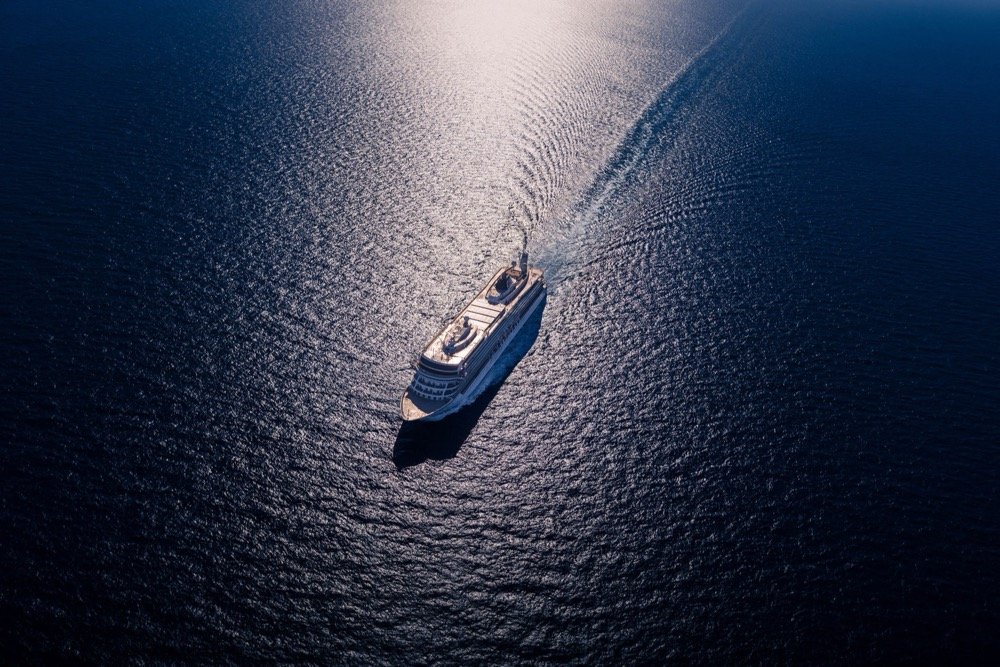
- Viking Libra handed over at Ancona on November 26
- Hybrid system pairs liquefied hydrogen with 6.3 MW of PEM fuel cells
- Removable tanks moved by truck sidestep the lack of hydrogen bunkering at cruise ports
- Sister ship Viking Astrea due in 2027
Fincantieri has delivered the Viking Libra, said to be the first ocean cruise ship built to run partly on liquefied hydrogen and fuel cells, at its Ancona yard in Italy.
The 54,300 GT ship carries up to 998 guests in 499 cabins, the shipbuilder said in a statement on Thursday.
Viking says it expects Libra and sister ship Viking Astrea, due from the same yard in 2027, to be operating on hydrogen next year, though it has not said where or from when.
"Together with Viking Astrea, Viking Libra will set a new standard for innovation as we bring this technology into operation in 2027," said Viking president Leah Talactac.
The fuel cells were developed by Isotta Fraschini Motori, a Fincantieri subsidiary, and according to Fincantieri produce 6.3 MW of electrical power across two containerised units, backed by a 4.7 MWh battery for peak shaving.
The hydrogen is held in two removable liquefied hydrogen tanks that can be swapped out and moved by truck, an arrangement Fincantieri says lets the ship use the fuel before any cruise port has a hydrogen supply chain of its own.
The shipbuilder says the system allows about three hours of zero-emission navigation at 10 knots plus 10 hours in port, enough for protected areas such as Norway's heritage fjords, and an annual emissions cut of about 20% against a conventionally fuelled ship if the tanks are refilled every two days.
Neither company has named a hydrogen supplier, a loading port, or the fuel the ship will otherwise burn.
Viking also says the Viking Mira, delivered in June, was designed so the same system can be retrofitted, without giving a date.
As Ship & Bunker reported earlier this year, Astrea was floated out at Ancona with the same propulsion arrangement.
"This project represents not only a technological advancement, but also a concrete step toward a cleaner and more efficient future," said Isotta Fraschini Motori chief executive Andrea Bochicchio.